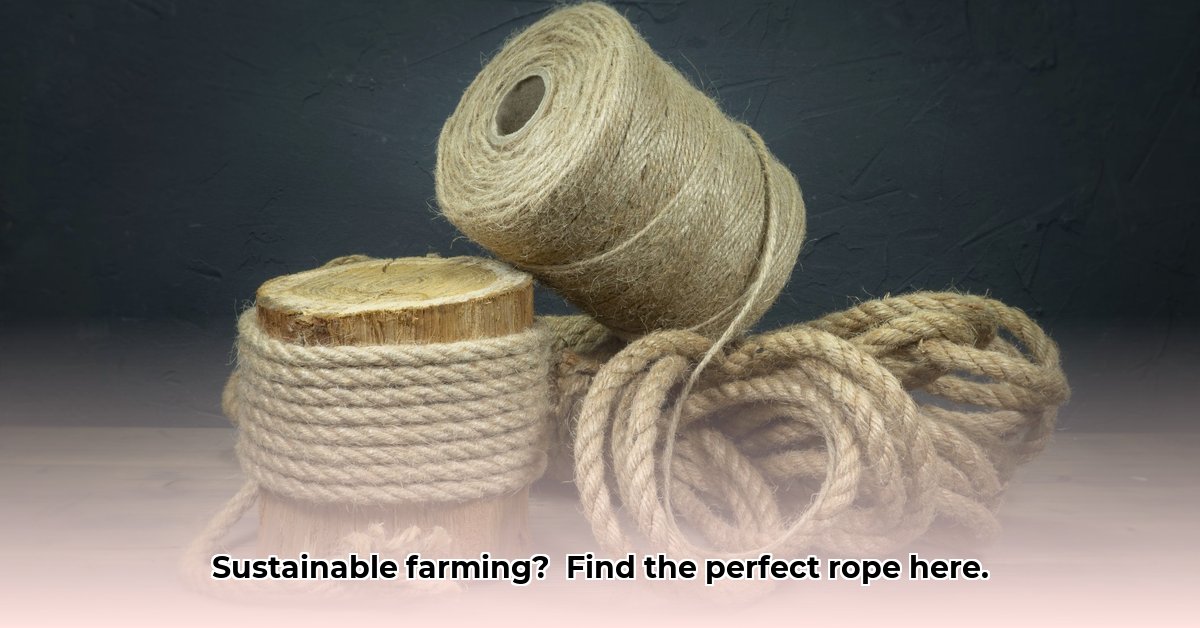
Choosing the right rope for your farm is crucial for efficiency and sustainability. This guide helps you select the perfect sustainable rope, covering eco-friendly materials, durability, and cost-effectiveness. We'll explore options at Tractor Supply and similar retailers, focusing on practical applications and actionable advice. For more information on farm supplies, check out this helpful resource.
Assessing Your Rope Needs: A Pre-Purchase Checklist
Before buying, define your rope's purpose. Baling hay requires heavy-duty rope, while securing livestock needs a different approach. Will the rope be exposed to sunlight, moisture, or heavy loads? These factors greatly influence material choice and longevity. For example, a heavy-duty polypropylene rope might be perfect for hauling heavy loads, while a more delicate hemp rope might be better suited for tying up delicate plants. What are your primary tasks? This will significantly impact your selection process.
Sustainable Rope Materials: A Comparative Analysis
Several sustainable options exist, each with unique properties:
| Material | Strengths | Weaknesses | Best Uses |
|---|---|---|---|
| Hemp | Strong, biodegradable, environmentally friendly | Can be more expensive, susceptible to rot in prolonged dampness | Hay baling, general farm tasks, animal tethers |
| Sisal | Durable, relatively affordable, biodegradable | Not as strong as hemp, can become brittle with age | Lighter tasks, plant supports, smaller bundles |
| Recycled Polypropylene | Affordable, weather-resistant, very strong | Not biodegradable | Heavy-duty work, where strength and weather resistance are key |
Biodegradable ropes naturally decompose, returning materials to the earth, unlike synthetic ropes which persist in landfills for extended periods.
Selecting the Ideal Rope at Tractor Supply and Similar Stores
Shopping for rope involves several key considerations:
- Diameter (Thickness): Thicker ropes are stronger but less flexible. Find the right balance for your tasks. A thicker rope excels at heavy lifting but may be cumbersome for finer jobs.
- Length: Buying in bulk saves money, but only purchase what's needed. Excess rope wastes storage space.
- Construction: Three-strand ropes are common, but braided ropes are typically more resistant to fraying, increasing durability and longevity.
- Treatments: Some ropes have UV or water-resistant treatments for extended outdoor use in harsh conditions.
Don't hesitate to seek assistance from farm store staff; they possess extensive rope expertise and can provide tailored recommendations based on your needs and budget.
Maximizing Rope Lifespan: Care and Maintenance Strategies
Proper rope care extends its lifespan and offers better value:
- Regular Inspections: Regularly inspect ropes for fraying, cuts, or broken strands. Replace damaged sections immediately to prevent accidents and further damage. Aim for weekly inspections for high-use ropes.
- Storage: Store ropes in a cool, dry place, away from direct sunlight and moisture. Dampness promotes rot and reduces lifespan.
- Cleaning: After each use, clean ropes to remove dirt and debris, preserving their strength and preventing premature wear.
Biodegradable Rope Selection: A Step-by-Step Guide
- Assess Your Needs: Define the rope’s purpose, considering weight, environmental conditions (sun, moisture), and frequency of use.
- Material Choice: Opt for natural fibers (hemp, sisal) for biodegradability or synthetics (polypropylene) for strength. Consider the environmental impact of each choice.
- Strength & Durability: Check the rope's breaking strength and working load limit. The rope must exceed the demands of the application.
- UV Resistance: For outdoor use, ensure the rope offers adequate UV protection. Exposure to sunlight can significantly degrade rope strength.
- Maintenance: Regularly inspect for wear and tear. Proper storage (dry, cool conditions) is crucial for preserving rope life.
"Choosing the right rope isn't just about the task at hand; it's about responsible resource management," says Dr. Emily Carter, Agricultural Engineer at Cornell University. "Sustainable options minimize environmental impact while maximizing efficiency and financial returns."
Rope Material Comparison: A Summary Table
| Rope Type | Strength | Biodegradability | UV Resistance | Cost | Best Uses |
|---|---|---|---|---|---|
| Manila | Medium | Low | Medium | Moderate | General farm tasks, tying, light lifting |
| Sisal | Medium | Low | Medium | Moderate | Plant supports, smaller bundles |
| Recycled Polypropylene | High | Very Low | High | Low | Heavy lifting, demanding applications |
| Hemp | High | High | Medium | High | Hay baling, heavy-duty applications where biodegradability is desired |
Remember, the optimal choice balances your specific needs with long-term sustainability and cost-effectiveness. Regular inspection and proper care are vital regardless of the chosen material. Prioritize rope selection based on the specific demands of your farming operations for maximized efficiency and minimal environmental impact.